ASPBAE in Action at the Asia Pacific Learning and Education 2030 (LE2030+) Networking Group Meeting
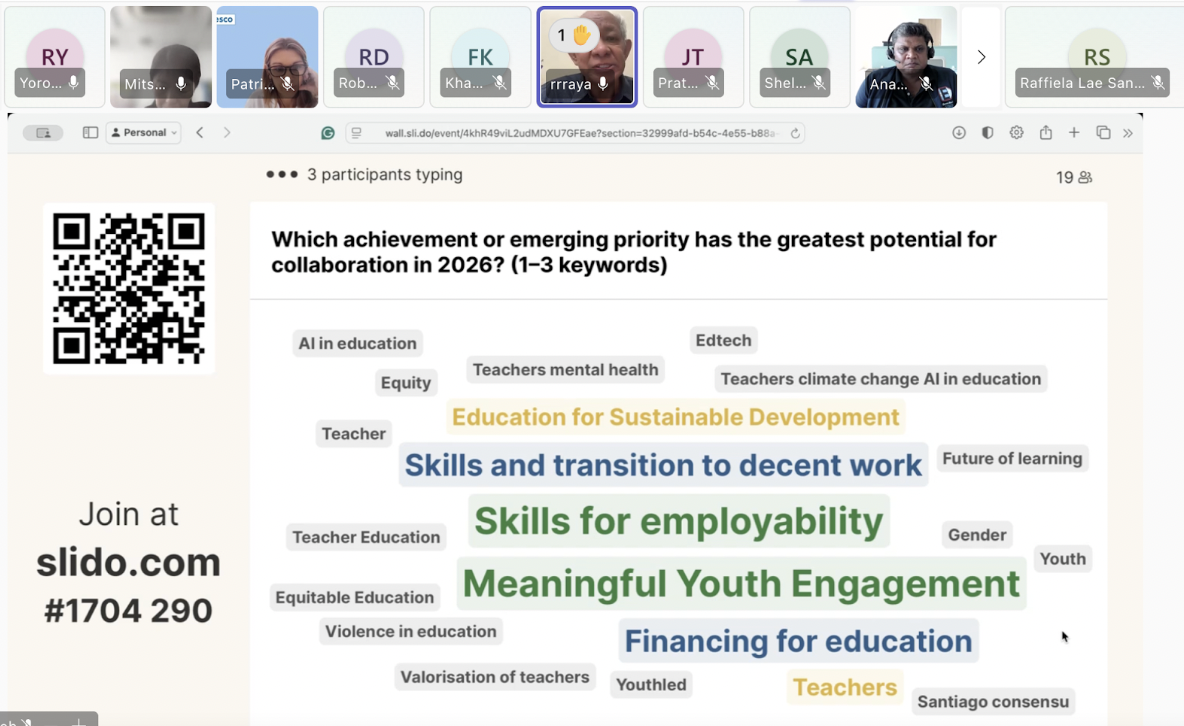
ASPBAE participated in the UNESCO-UNICEF “22nd Learning and Education 2030+ (LE2030+) Networking Group Meeting” held virtually on 15 December 2025. The session featured reports from the Technical Working Groups on the achievements and progress of the LE2030+ work plan, a sharing of updates from the global level and emerging priorities at regional level, and a brainstorming session on the priorities for collaboration in 2026.
Ms Marina Patrier, Deputy Director and Chief of Education Section, UNESCO Regional Office in Bangkok and Office for UN Coordination for Asia and the Pacific, emphasized that equity and inclusion must remain at the heart of our work to ensure that learners from marginalized and vulnerable backgrounds and conflict-affected areas are reached by the education system.
She also stated that the LE2030+ Networking Group must speak more clearly on the education priorities of the Asia Pacific region and translate these into real actions.

In his intervention, ASPBAE’s Regional Advocacy Coordinator and Lead Policy Analyst, Rene Raya, raised the following:
- Creating a working group on education financing so there is an opportunity to share experiences on how to navigate financing challenges in education.
- Increasing the budget for education and advocacy for tax cooperation, Official Development Assistance (ODA), and debt management.
- Addressing the digital divide in light of the rapid advancements in digital technologies in education.
ASPBAE, as an active member of the LE2030+ Networking Group and as the incoming CSO representative in the global SDG 4 High-Level Steering Committee (HLSC) Sherpa Group representing the Collective Consultation of NGOs on Education 2030 (CCNGO Ed2030) for the term 2026-2027, stands ready to sustain its active engagement in these strategic intergovernmental processes for education, ensuring that civil society voices, including marginalised youth and women, are well-represented in the global and regional policy spaces.