
ASPBAE at the 4th International Conference on Equitable Education
ASPBAE’s Regional Advocacy Coordinator and Lead Policy Analyst, Rene Raya, spoke during the 4th International Conference on Equitable Education in Nonthaburi, Thailand on 23-24 October 2026.
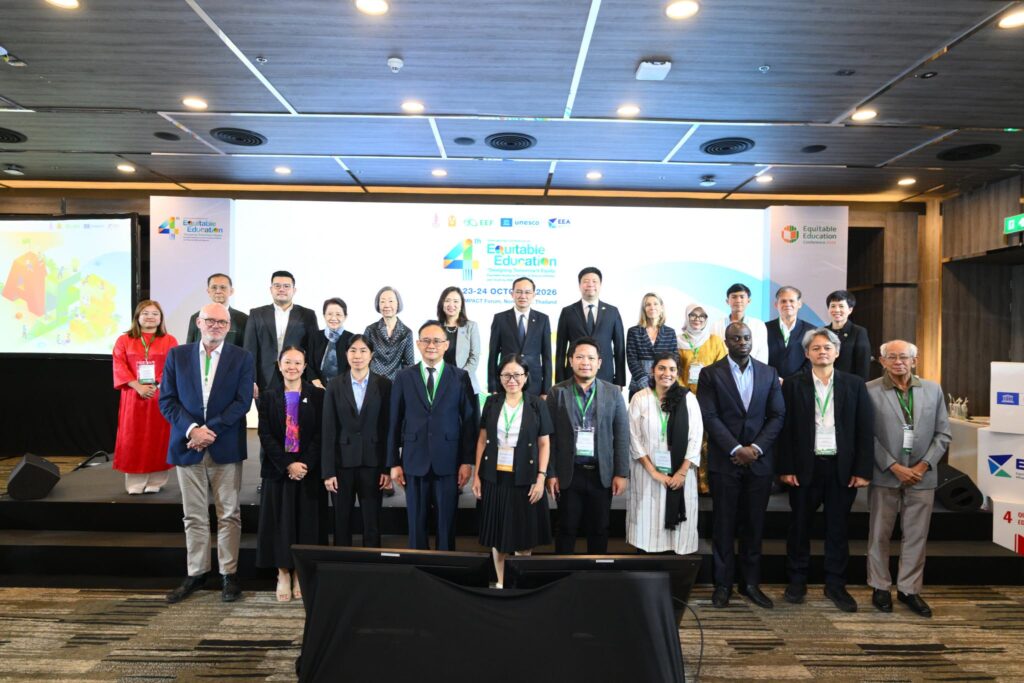
(Photo from UNESCO Bangkok)
With the theme ‘Designing Tomorrow’s Equity: Equitable Solutions for Out-of-School Children and Youth by 2030 and Beyond,’ the event was organised by the UNESCO Regional Office in Bangkok and Office for UN Coordination for Asia and the Pacific (UNESCO Bangkok), and the Equitable Education Fund of Thailand (EEF Thailand), as Co-Chairs of the Equitable Education Alliance (EEA) under the Learning and Education 2030+ (LE2030+) Network in Asia and the Pacific. It brought together policymakers, education practitioners, researchers, development partners, young people and civil society organizations to exchange experiences, share innovative approaches and identify practical solutions to reach out-of-school children and youth and ensure that no learner is left behind.
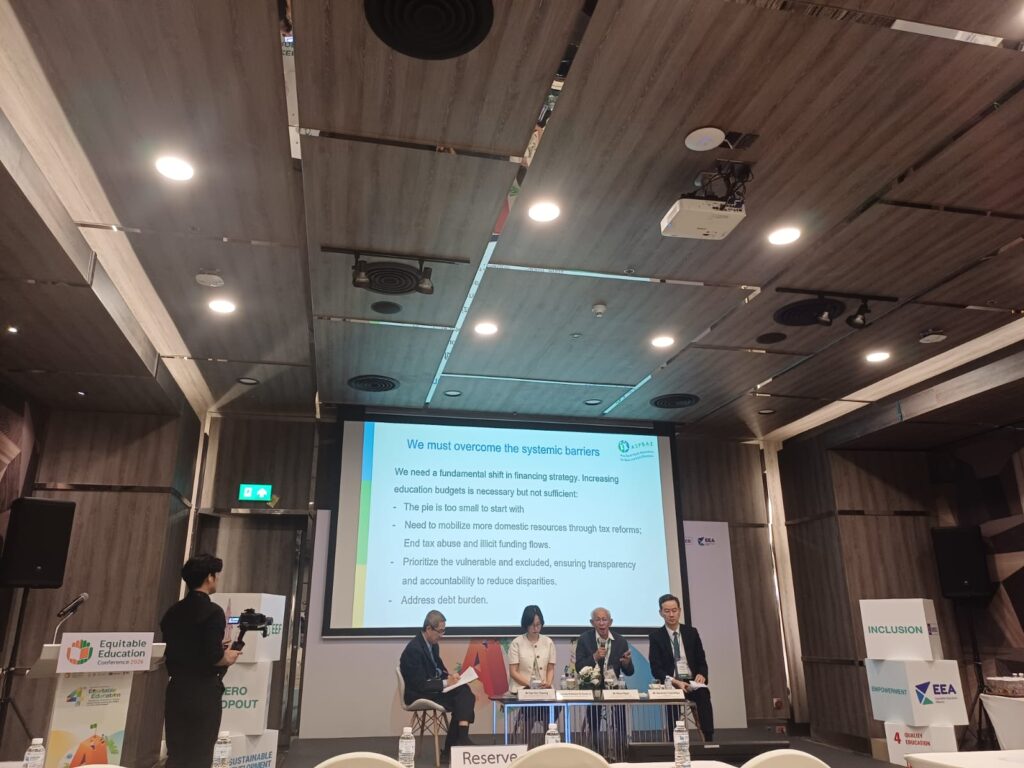
Providing his input in the session on “Financing the Last Mile — Policy Pathways to Education Equity, Rene emphasised that as a regional civil society network advocating for education, ASPBAE undertakes continuing research and campaigns on education inclusion and financing.
He also underscored persistent problems in education such as on access, completion and quality of learning across the Asia-Pacific which are disproportionately affecting disadvantaged learners – the last milers from low-income, rural and remote communities. There is regression in SDG Target 4.5 which calls for eliminating gender disparities and ensuring equal access to education for disadvantaged learners, showing that the pledge to “leave no one behind” is a missed ambition of the SDGs. Across Asia-Pacific, fiscal, economic and budgetary policies are exacerbating existing inequalities in education. Inadequate public investment and inequitable resource allocation undermine progress in education, compounded by shrinking fiscal space, debt-service pressures, declining aid and intensifying climate shocks.
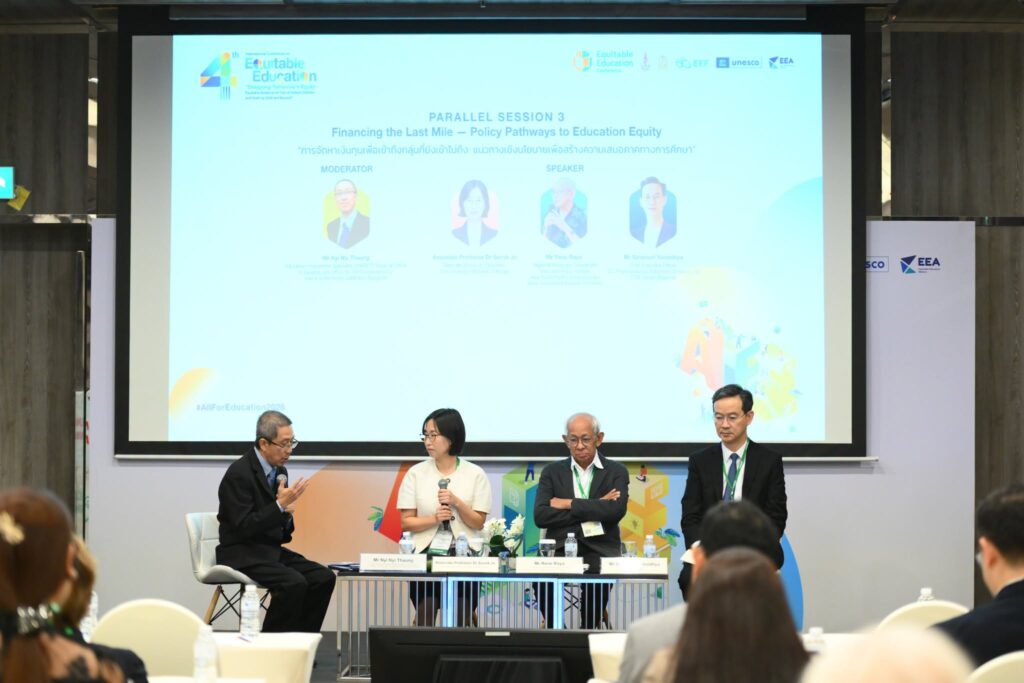
(Photo from UNESCO Bangkok)
Further, Rene asserted the need for a fundamental shift in financing strategy, noting that increasing education budgets is necessary but not sufficient: additional resources must be mobilized progressively, prioritizing the vulnerable and excluded, and ensuring transparency and accountability to reduce disparities. Transparency requires stronger disaggregated data, including budget allocations and outcomes for marginalized learners. Robust research related to education financing, resource mobilization and budget allocations is also needed. Various countries in the region have done intensive budget monitoring such as SDG budget tracking, and learner budget costing and expenditure tagging. Formula-based allocation of resources can correct existing inequalities and disparities in education access and outcomes. Over the long term, progressive tax reforms must be initiated to increase domestic revenues. The final years of the SDGs are critical to press for concrete actions to support the last milers, and to provide quality second chance education and multiple learning pathways to those already out of the education system.
Over the two days of the event, participants engaged in high-level plenary discussions, thematic parallel sessions, and networking opportunities focused on four key pillars: Flexible learning pathways for out-of-school children and youth; Data systems, early warning mechanisms, and AI-enabled approaches to prevent school dropout; Equitable and sustainable financing policies for education; and Strengthening multisectoral partnerships to advance inclusive education solutions.