ASPBAE’s Youth Re-imagine the Futures of Education Beyond 2030
Across the region, significant progress in education has been made in primary and secondary education enrolments, literacy rates, girls’ education, and a decline in out-of-school rates. Despite this, young people, especially those from marginalized backgrounds, continue to face persisting and emerging challenges, such as worsening inequalities and poverty, a changing world of work, the existential threat of the climate crisis, the rise of digital technologies, including Artificial Intelligence (AI), violent conflicts, growing attacks on human rights, poor governance, and the erosion of democratic governance- all of which impact their education and learning.
And as they grapple with these challenges and changes, they are called to re-imagine the kind of world they want and what needs to be done today to make the necessary changes. How do youth in Asia and the Pacific envision their shared futures? How should education systems be transformed to be more inclusive, collaborative, progressive, and liberating? What can they do differently to achieve a world in which youth share equal space, equal voice, equal representation, and equal resources?
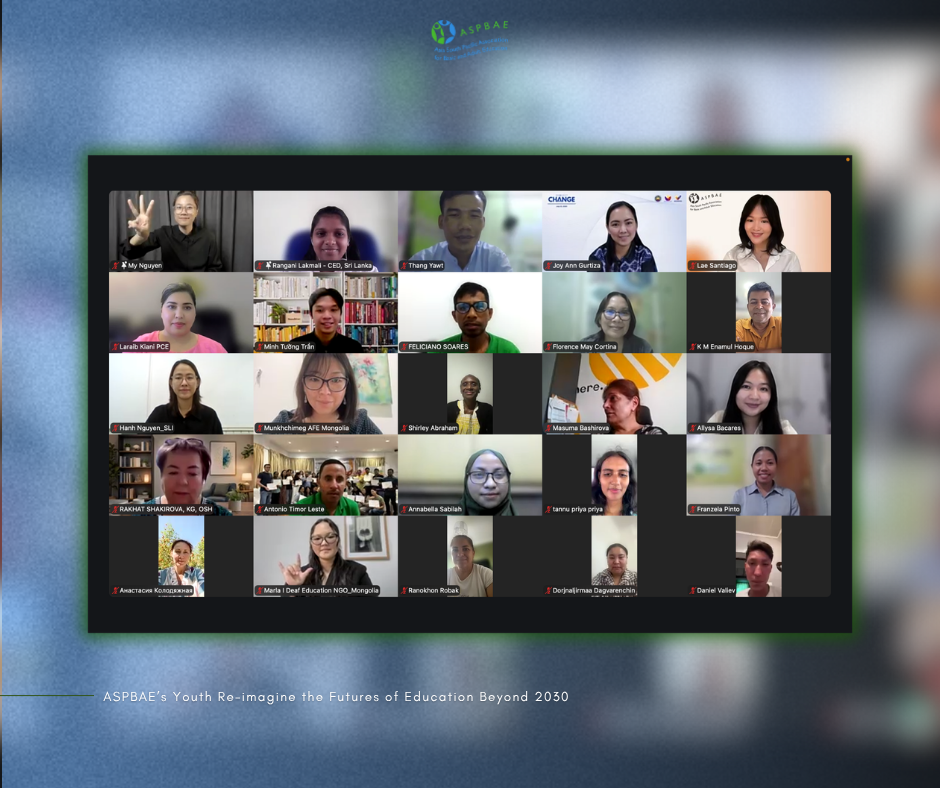
It is within this backdrop that ASPBAE and its Youth Core Team organized the Asia Pacific Regional Youth Dialogue on the Futures of Education, in celebration of International Youth Day. Over 90 participants joined the intergenerational Dialogue, including 39 youth, aged 19-30, from various countries in the Asia Pacific region. Through this dialogue, youth were able to articulate the futures of education that they seek to build and explore the changes young people want to see in formal and non-formal education systems.
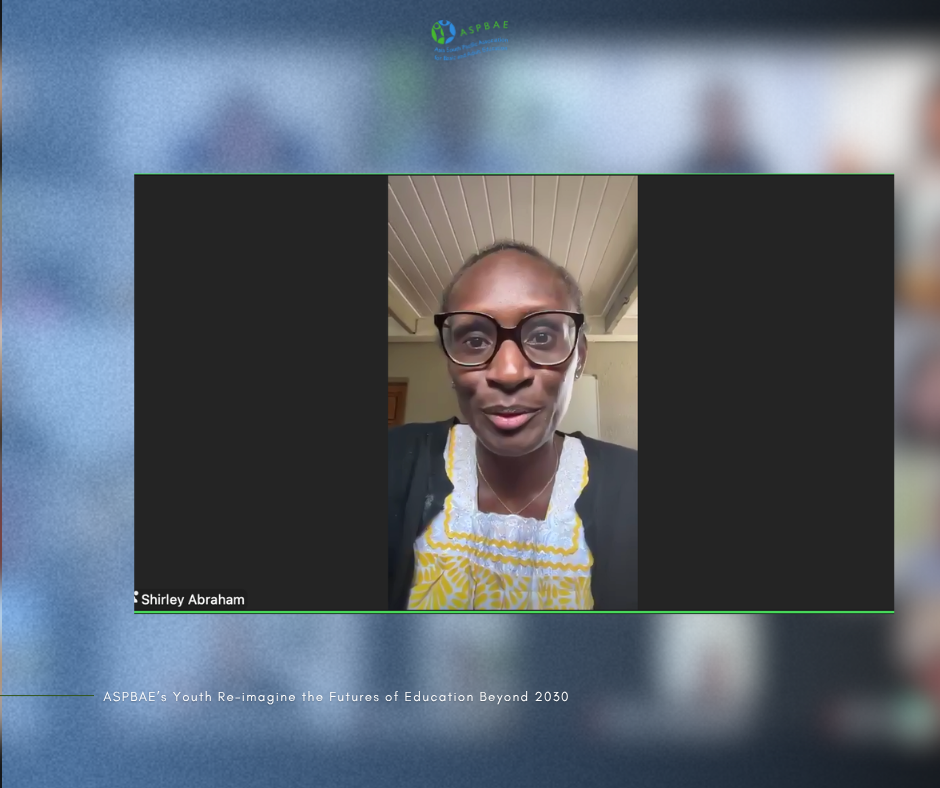
Sharing the Opening Remarks was Shirley Abraham, Chief Executive Director, Vanuatu Association of NGOs (VANGO) and ASPBAE Executive Council Representative for South Pacific (Sub-region 4), who set the context, sharing that the youth in the South Pacific are facing real challenges, from the changing landscape of employment and rapid digitalization to the worsening climate crisis and governance issues. She highlighted one’s responsibility in creating a space for youth to lead and ensure their recommendations are translated, such as what transpired in the ASPBAE Youth-Led Action Research (YAR) process, where young people’s lived experiences were amplified and brought forth to governments and relevant actors.
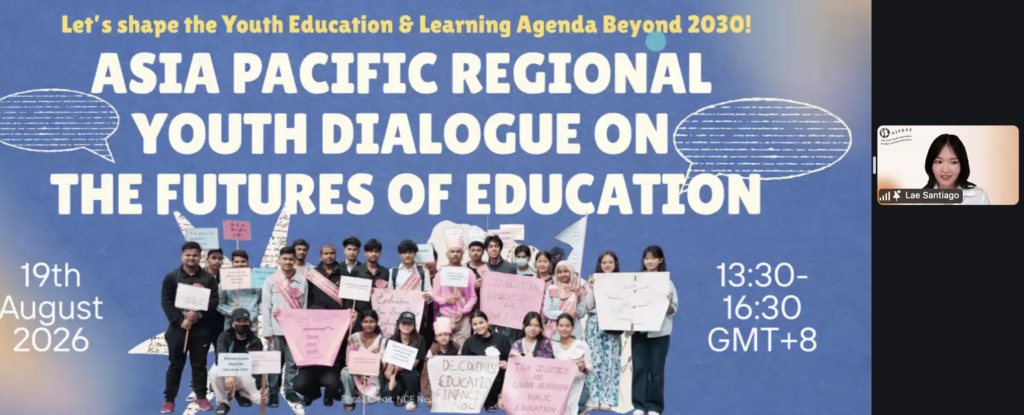
ASPBAE’s Advocacy and Youth Engagement Officer, Lae Santiago, moderated this Dialogue and shared that when the Futures of Education started to gain more attention back in 2019, ASPBAE actively participated in the discussions within the Global Campaign for Education (GCE), within the International Council for Adult Education (ICAE), and UNESCO, to rethink and reimagine the purpose of education and how it should be fulfilled. Drawing attention to ASPBAE’s youth publication “From the Margins to the Center: Youth Informing the Futures of Education,” she explained that this Dialogue builds on previous efforts to reimagine the futures of education, aiming to provide a platform for diverse Asia Pacific youth voices to contribute to the ongoing dialogue to shape the Post-2030 Youth Education and Learning Agenda, identify the priorities and aspirations of young people for the world and education, and put forward actionable recommendations on how to achieve this.
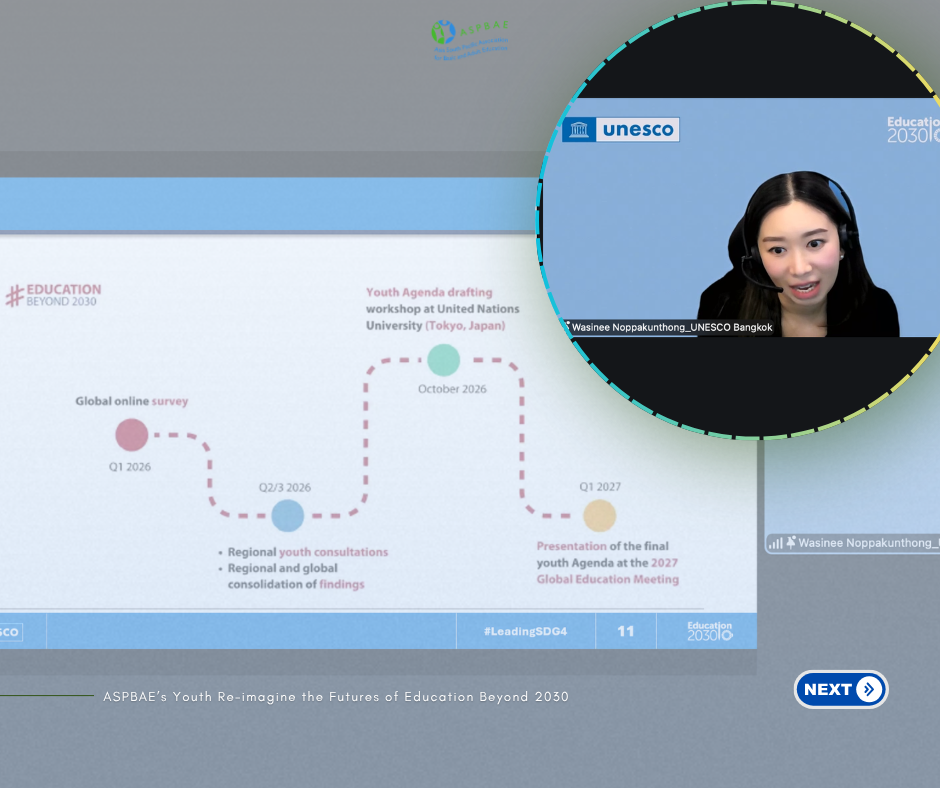
Wasinee Noppakunthong, Associate SDG 4 Coordinator for Asia-Pacific at UNESCO’s Regional Office in Bangkok and Office for UN Coordination for Asia and the Pacific (UNESCO Bangkok), offered an orientation to the Post-2030 Education and Learning Agenda process of UNESCO, including the background and the timeline, saying that the youth-led consultations aim to build youth’s vision for education, one that would set the foundation for the coming consultations with other stakeholders. She also mentioned that the initial survey findings revealed that youth deem education as inseparable from society. Education plays a critical role in building inclusive, peaceful, and sustainable societies, where diversity is respected, mental health and meaningful relationships are prioritized, and learning is relevant, creative, and empowering, and flexible pathways for lifelong learning are available.
Youth participants were then invited to respond to the poll question: “Now that you’ve heard how the Post-2030 process works, what do you hope happens to young people’s voices after today’s dialogue?” to which they responded:
- “I hope young people’s voices don’t end with today’s dialogue. I hope they are reflected in decisions, policies, and actions after we leave this room.”
- “The older generation should give opportunity to the younger generation to decide autonomously and become emancipated through policy decisions.”
- “I hope young people’s voices are heard, valued, and translated into concrete action. Their ideas should help shape education policies, not only through consultations but through meaningful participation.”
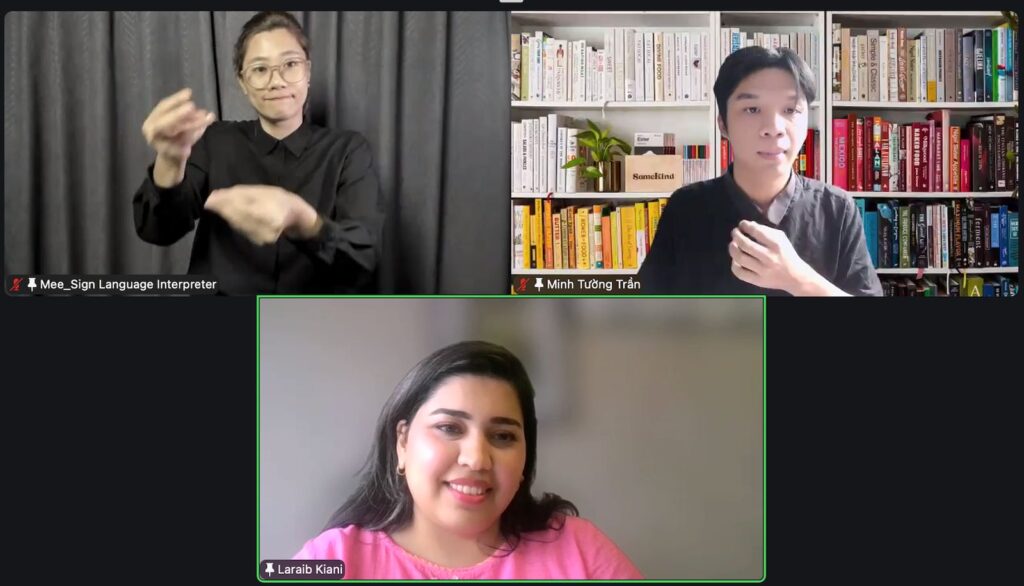
Facilitated by Laraib Kiani, Coordinator of Program Development, Communications, and Advocacy at the Pakistan Coalition for Education (PCE), the session on the Conversation Starters featured three youth leaders from Vietnam, India, and Mongolia to share their insights on disability-inclusive education, climate change education, and civic education.
Trần Minh Tường, Youth Representative of the ASPBAE national education coalition member, Vietnam Association for Education for All (VAEFA), and also serves as Global Partnership for Education (GPE) Youth Leader, spoke about his experience as a deaf youth advocate for disability-inclusive education. He noted with concern the limited educational opportunities for deaf youth, especially with the closure of the education programs for deaf youth at Dong Nai University, the shortage of teachers trained in sign language, and the overall lack of support for deaf students. He envisions a world where there is no one left behind, and education is easily accessible and inclusive for youth living with disabilities. In the future, he hopes to develop software to support the education and learning of deaf youth.
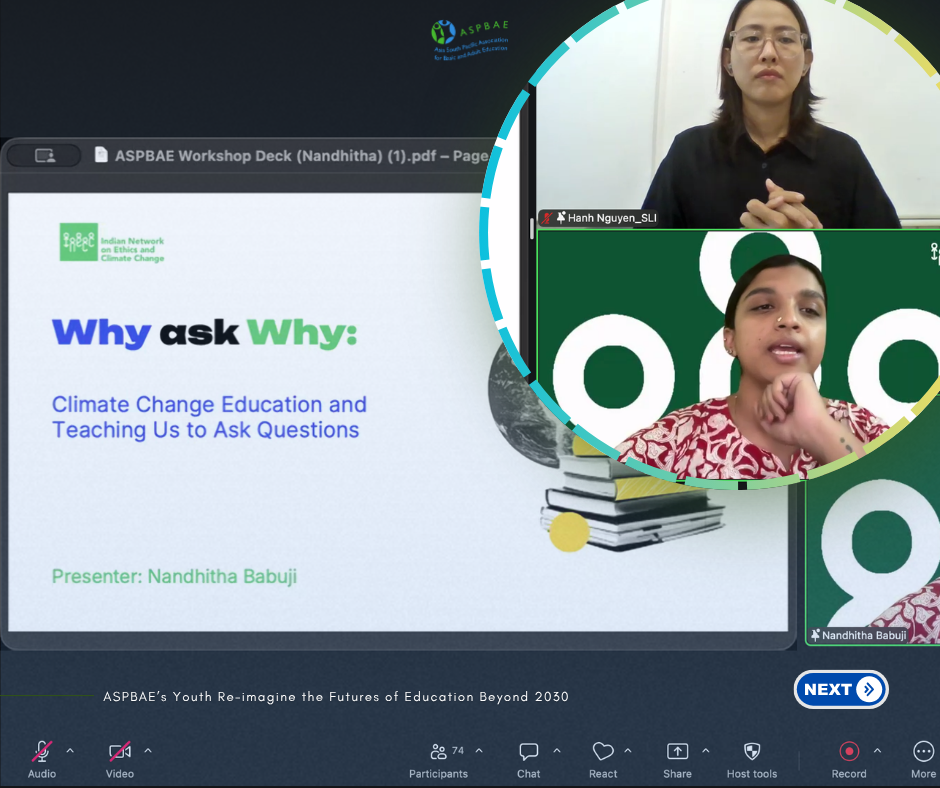
Nandhitha Babuji, National Facilitator and Youth Representative of ASPBAE member, Initiative for New Ecological Community Concerns (INECC) India, talked about the “whys”- Why does climate change belong in education? Why does education need to do more than just create awareness? She believes that education, now, has to help young people understand the world they actually live in – not the one they expected to inherit. Education is not just about the facts but about exploring why the world works this way and whether it has to. “Beyond encouraging curiosity as a core principle for life, education also has the opportunity to develop the skills young people need at this critical junction of transitioning to climate futures. Systems thinking can help them understand the interconnectedness and complexity of the world they are inheriting.”
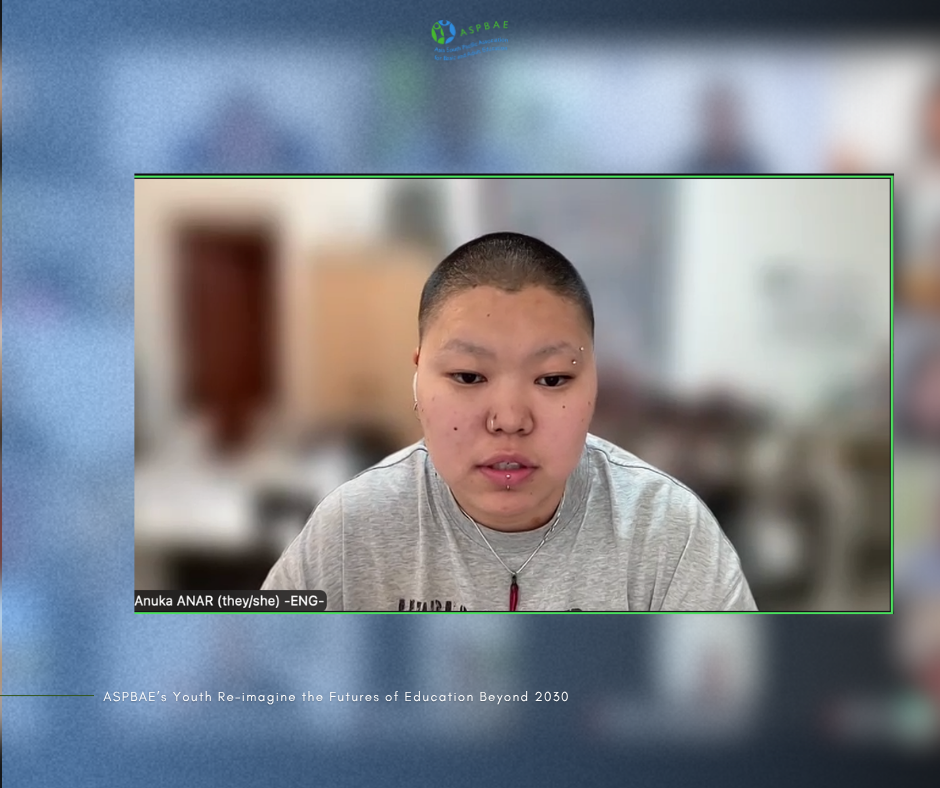
Anar “Anuka” Anudari, Executive Director, Youth LEAD Mongolia, and Youth Representative of ASPBAE’s national education coalition member, All for Education! National Coalition in Mongolia, highlighted the intersection of education, youth empowerment, and civic participation. Anuka challenges the notion that youth are “disengaged” or uninterested in politics, saying that we need to look at how schools and educational institutions are teaching youth to participate, and what education teaches youth about their place in society. Having opportunities or structures for youth participation in place does not necessarily mean that every young person has equal access to those spaces. Believing that knowing is different from experiencing, Anuka thus emphasized the importance of combining theoretical knowledge with practical application to ensure that youth are given the opportunity to develop their skills, challenge the norms, raise questions, demand accountability, and realize that they have the right and the ability to influence what happens in society. To close the session, Laraib underscored that youth are calling for real roles and influence in decision-making that ultimately affect their lives, and the need to move from consultation to co-creation, and from commitments to concrete actions.
The Open Forum allowed for a deeper discussion on the kind of world young people want to live in beyond 2030 and the role of education in building this world; what should change about education, and why; what are the most urgent educational challenges youth face; and what are the actions they need to see from governments and fellow youth, and how young people should be meaningfully involved.
Young people want to live in a peaceful, just, inclusive, and sustainable world, where everyone has equal opportunities, where youth can grow up without fear of violence, discrimination, exclusion, and insecurity. A world where fundamental human rights and dignity are fulfilled, the environment is respected, and young people are free to participate in decision-making. Youth demand and aspire to a liveable and safe world, where societies do not prioritize infinite growth on a finite planet, but instead model ecological stewardship, peace, and justice.
Through education, youth want the ability to take on an active role in their learning, realize their agency and potential, improve critical thinking, carry out collective actions for social justice, and lead happy, healthy, and fulfilling lives. The vision is for educational opportunities to enable youth to better understand diverse perspectives, communicate peacefully, become better carers of the environment, and become advocates of peaceful and safe societies.
Schools, educational institutions, and learning spaces must allow learners the freedom to cultivate critical inquiry- to think critically and ask questions. These should model the futures they aspire to and explore more diversified, creative, and engaging forms of learning, including experiential, inquiry-based, and community-based learning, artistic pursuits, collaborations, and action research. It is also suggested to adopt relevant, learner-centred pedagogy which acknowledges that everyone has unique needs that can be accommodated through a continuum of teaching approaches.
Among the participants, there was deep concern that without addressing corruption within governments, the commercialization of education, and insufficient education financing, very little could change. Youth also noted the persisting issue of unequal access to education and lifelong learning opportunities, the lack of practical application of education, the system and curriculum developed by colonial rulers and the Western model, and the lack of civic education.
Governments, educational institutions, civil society, international NGOs, and development partners have a responsibility to move beyond tokenism and provide safe, inclusive, and well-resourced mechanisms for the leadership and meaningful engagement of youth from the beginning and at every stage of education decision-making — not only consulted after priorities have already been decided. Youth must be recognized as actors with agency, ownership, and shared-decision-making power, as co-creators of education policies, solutions, and social change, not merely as beneficiaries or invited participants.
Lae then presented the next steps, saying that the outcomes of the discussion will feed into the ASPBAE Regional Youth Statement, consolidating the recommendations of the youth, and called on Rangani Lakmali, Programme Coordinator for the Coalition for Educational Development (CED) in Sri Lanka and ASPBAE Youth Core Team Representative, to share the vote of thanks and closing remarks.
ASPBAE developed the Collective Response to the UNESCO Global Survey Youth Post-2030 Education and Learning Agenda, which drew not only from the outcomes of the discussion during this Dialogue, but also from ASPBAE’s Futures of Education publication, the GCE-ASPBAE Makati Youth Call to Action, the Asia Pacific youth leaders’ speeches during the Global Campaign for Education’s (GCE) Global Youth Debate, and the Civil Society Spotlight Reports on SDG 4 Youth Perspectives.