Putting a Spotlight on Education and Youth Agency at the Pakistan Coalition for Education’s 17th National Convention on Youth Agency in Education 2026
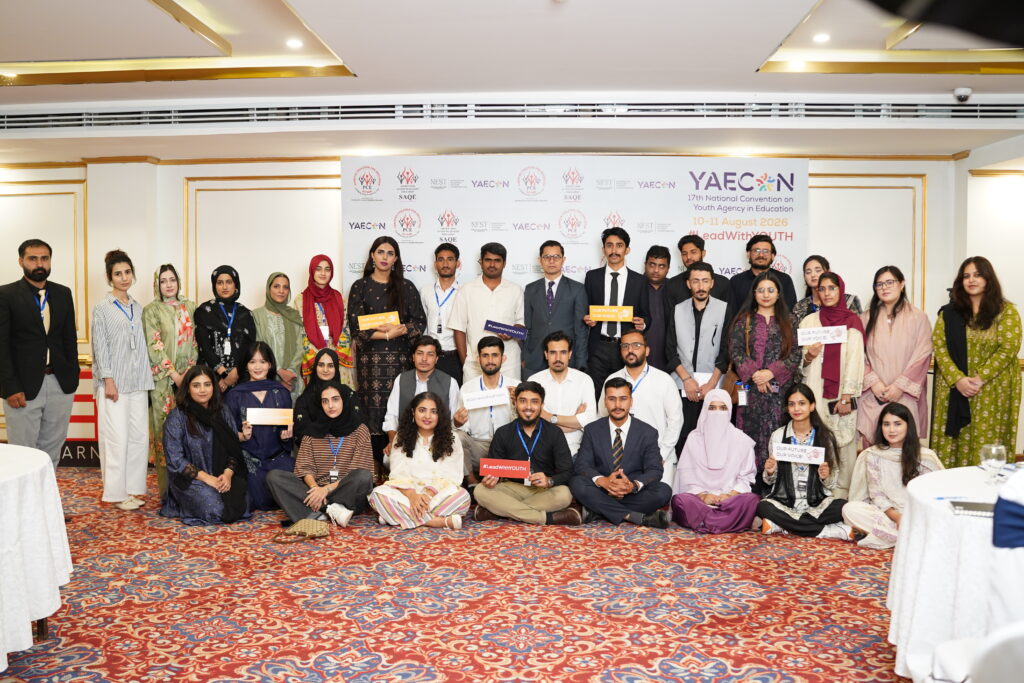
The 17th National Convention on Youth Agency in Education 2026, organized by ASPBAE member Pakistan Coalition for Education (PCE), an initiative of Society for Access to Quality Education (SAQE), on 10-11 August 2026, in Islamabad, Pakistan, brought together educators, policymakers, youth leaders, and education advocates across the country to explore these important questions- Is Pakistan’s education system working for youth? Is education cultivating the agency, skills and self-determination that young people need to shape their own futures? What does youth agency and inclusion entail? What should education look like after 2030?
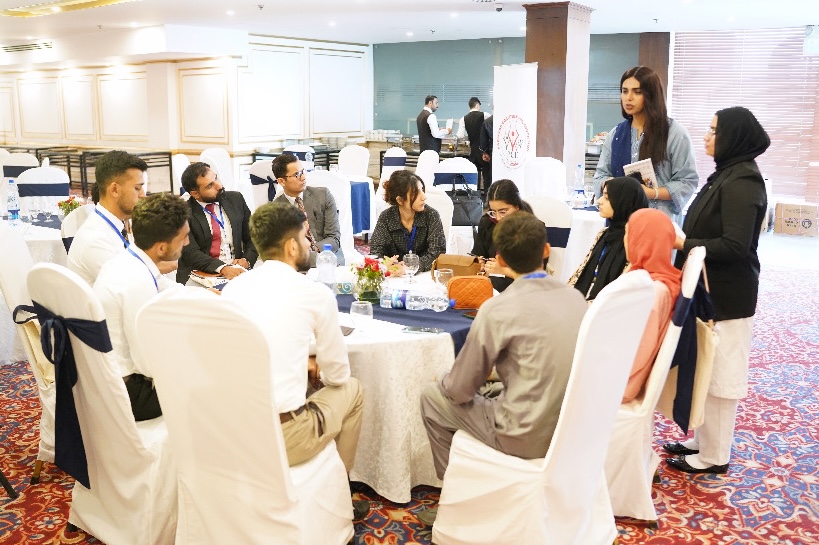
This two-day national dialogue featured the launch of a groundbreaking national study on youth agency in public secondary schools conducted by PCE-SAQE, titled “Whose Voice Matters? Youth Agency in Determining and Learning the Skills that Matter in Pakistan’s Public Secondary Schools.” Through the Convention’s Youth Policy Assembly, diverse youth in Pakistan were given the space to speak on their experiences in education systems and decision-making processes, and develop a Youth Policy Statement that outlines a set of youth demands, based on the findings of PCE-SAQE’s study and presented to senior education officials.
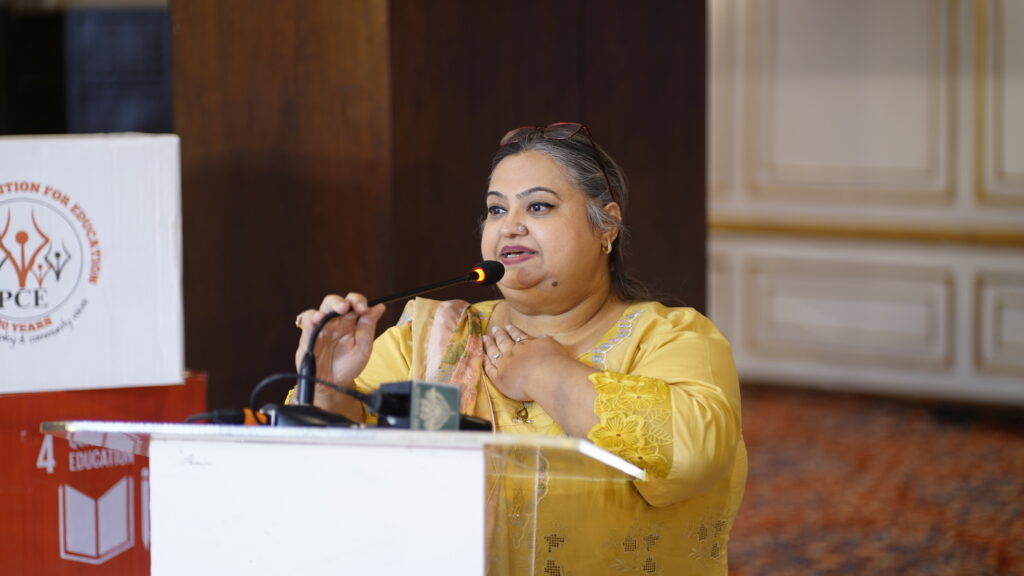
Framing the discussion for the two days, Zehra Arshad, SAQE Executive Director and PCE National Coordinator, offered her welcome remarks and a short background on the Convention. Looking to the participants, she described PCE-SAQE as Pakistan’s longest-running education coalition, built by people, activists, communities, and the real stakeholders of the education system. It mobilises and strengthens grassroots communities, surfaces the country’s most pressing education problems, and carries the voices of marginalised people to policymakers. She then turned to the gap between what education policy promises on paper and what it delivers on the ground. This gap persists partly because the people living with its consequences are rarely in the room when decisions are made. Young people least of all. That framing led directly to the questions she put to participants: how they understand youth agency, how meaningfully they engage young people, and whether they genuinely act on what young people tell them.
Harris Khalique, poet, civil society activist, SAQE’s Board Chairperson, and the Secretary General for Human Rights Commission of Pakistan, followed with a strong keynote message, “Youth Agency and the Case for Reform,” providing a reading of the context, saying that neoliberalism, wars, massive funding cuts, growing profits of the global rich, and changing priorities have implications on education, and that “every citizen, young and old alike, has a right to informed participation in decisions that will ultimately affect their lives.”
The opening plenary session on “Does Pakistan’s Education System Work For Its Young People? Examining the agency gap,” was moderated by Zehra Arshad, which generated key inputs from the following panel of speakers:
🎤 Minail Khan, Chief Technical Advisor, National Assembly Secretariat, on how youth perspectives can be better integrated into the education policy-making process;
🎤 Ali Siddiq, Chief Executive, Amal Academy, on bridging the gap between formal education and the skills today’s job market demands;
🎤 Areebah Shahid, Executive Director, Pakistan Youth Change Advocates, on what meaningful youth participation in education actually requires;
🎤 Dr Saira Khan, Assistant Professor, Department of Psychology, Rawalpindi Women University, on nurturing genuine agency and confidence in young people;
🎤 Ikram Ul Ahad, Manager Communications, Population Council, on Pakistan’s youth bulge and what it takes to prepare a generation to shape its own future.
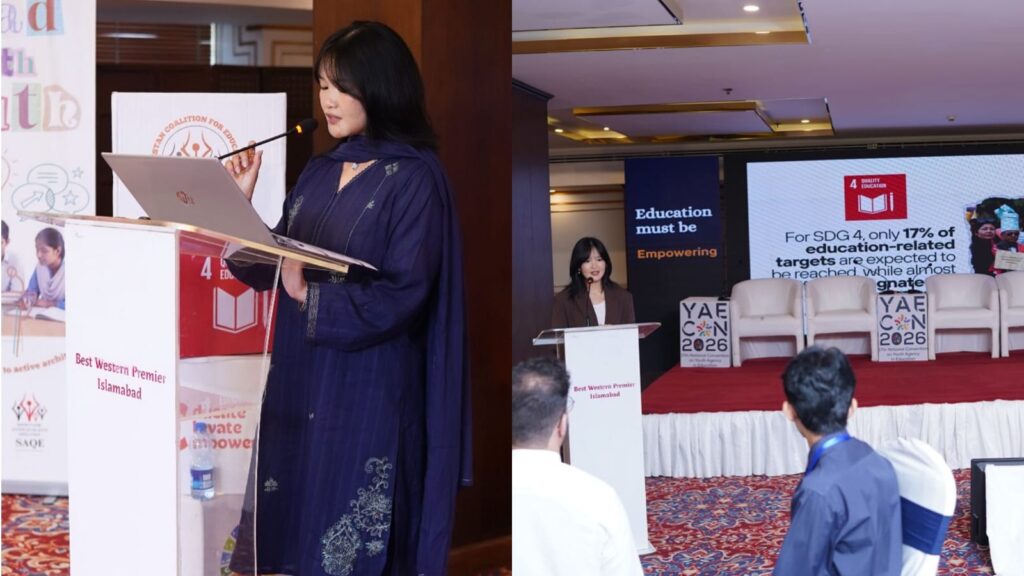
Part of the Convention was a Youth-led Consultation on the UNESCO Post-2030 Youth Education and Learning Agenda, where the youth participants discussed their vision and aspirations for a better world, the changes in education and learning they wish to see, and the actions that young people themselves are ready to take and what they believe governments and key stakeholders should do to bring about this vision. This session aimed to produce Pakistan’s contribution to the UNESCO Global Youth Survey, as an official group response. ASPBAE’s Advocacy and Youth Engagement Officer, Lae Santiago, offered a brief context setting and introduction to the UNESCO Post-2030 Youth Education and Learning Agenda process. She encouraged the youth to reflect on what needs to change within education systems so that youth’s imagined futures for a better world can be realized.
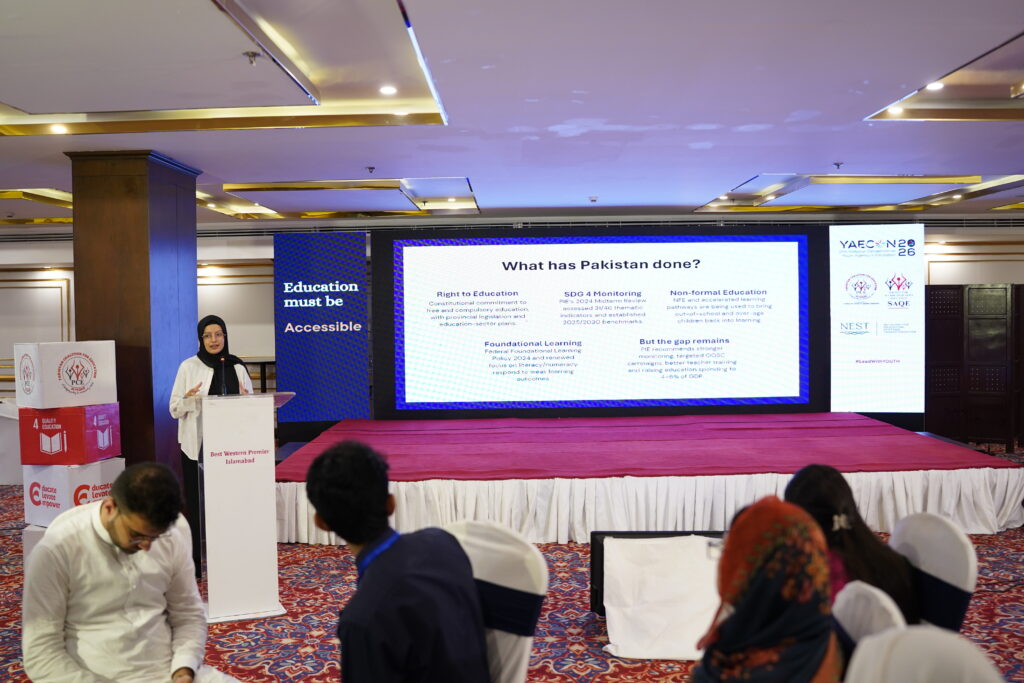
Youth representative of Global Shapers and Islamabad Hub, Dua-e-Zehra, took stock of Pakistan’s progress on SDG 4, sharing that while there has been progress in terms of constitutional commitment to free and compulsory education, with provincial legislation and education-sector plans, foundational learning, SDG 4 monitoring indicators, and non-formal education and learning pathways for out-of-school and over-age children, persistent gaps remain.
Alongside the Youth Consultation was a parallel Education 2030+ High-Level Stakeholder Consultation where adult actors, civil society, and government partners took stock of Pakistan’s Education 2030 commitments, progress, shortcomings, gaps, and ways forward, chaired by Syeda Amnah Batool, Member of the National Assembly of Pakistan, Focal Person for the Prime Minister’s Youth Programme, and moderated by M. Ali Kemal Economist, Ministry of Planning Development & Special Initiatives (MoPDSI).
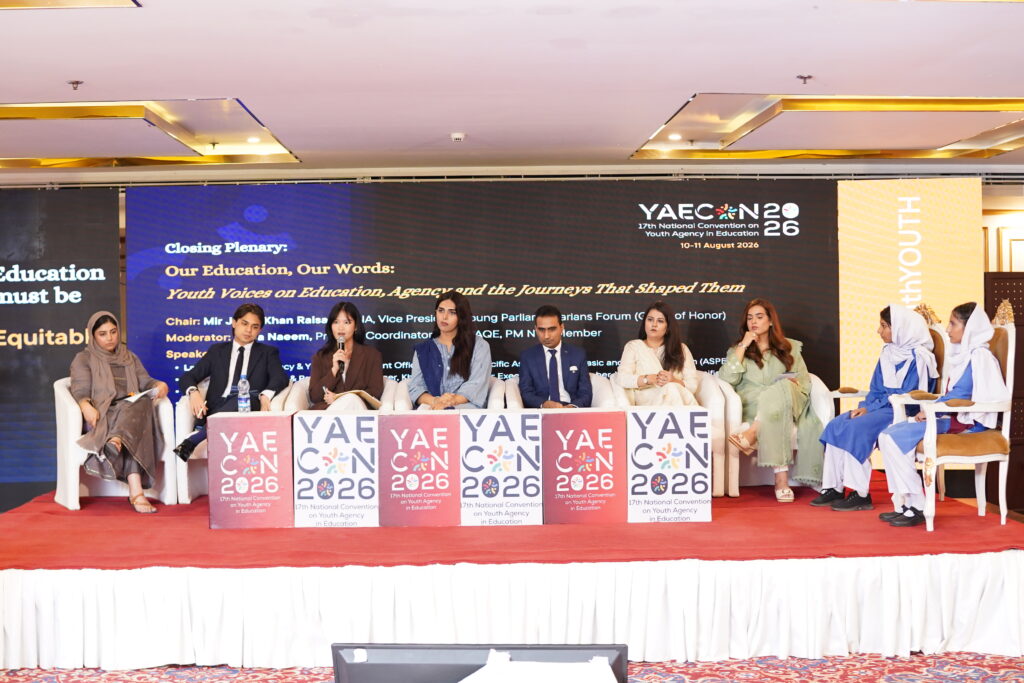
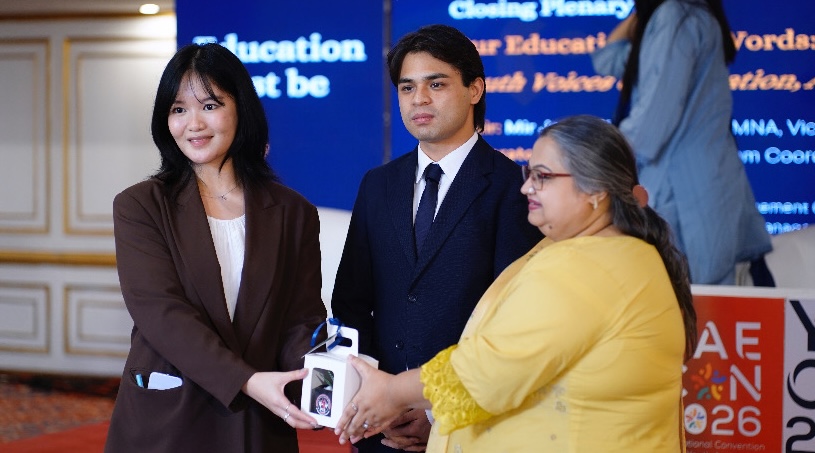
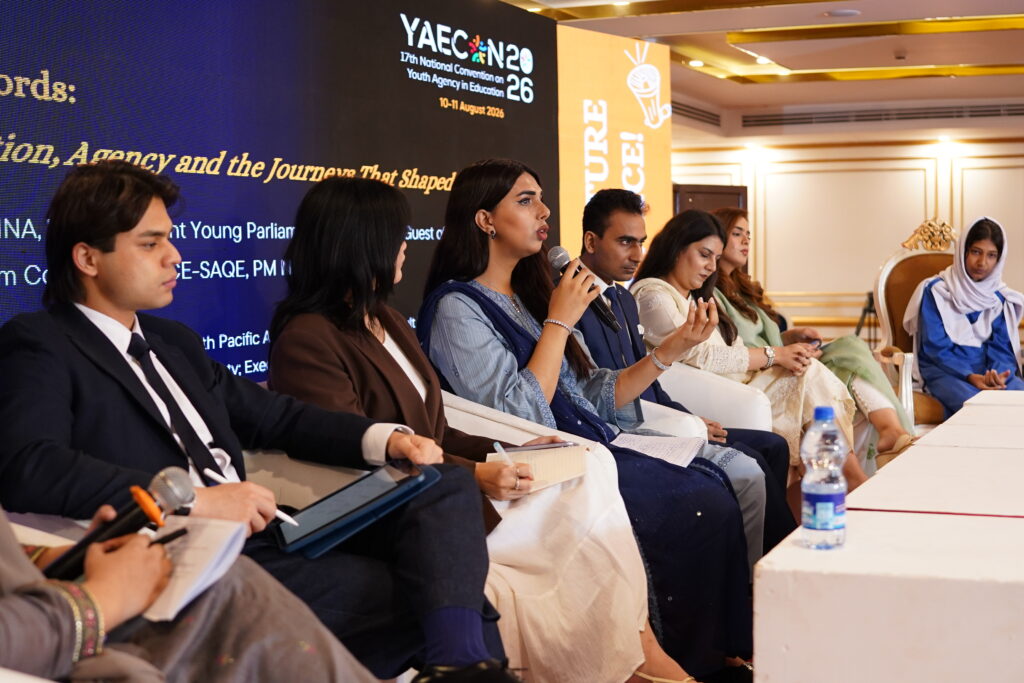
Speaking at Day 1’s closing plenary with the theme, “Our Education, Our Words: Youth Voices on Education, Agency and the Journeys That Shaped Them!” were youth leaders from different contexts who shared their stories, experiences, and perspectives on what inclusion really means, what meaningful youth participation requires, and the role education plays in building youth agency. This was moderated by Urwa Naeem, PCE-SAQE Program Coordinator and ASPBAE Youth Core Team Member, and chaired by Mir Jamal Khan Raisani, Member of the National Assembly of Pakistan, General Secretary, Young Parliamentarians Forum, as the Guest of Honour. The youth leaders highlighted the following:
🎤 Waqas Ramzan Global Shapers Islamabad, Inclusion and Accessibility Consultant, on his story as a youth leader living with a disability, and what inclusion actually means in practice;
🎤 Sidra Riaz, Presidential Doctoral Fellow, Florida International University, on her journey as a youth advocate across grassroots and international spaces, and how seriously young people’s perspectives are truly taken;
🎤 Lae Santiago, Advocacy and Youth Engagement Officer, ASPBAE, on ensuring regional and global advocacy translates into concrete action at the national and local levels, and demanding that those in positions of power listen to, amplify, and act on young people’s demands;
🎤 Dr. Sadya Salar, Advocacy and Partnerships Manager, Khawaja Sira Society; Executive Board Member, Youth LEAD Asia Pacific, on her experience as an advocate for trans rights, and the need for recognition, empathy and support systems to address the systemic discrimination and exclusion of transgender learners;
🎤 Umul Baneen Programme Officer, National Education Foundation, on how marginalisation is perpetuated by structures, systems, attitudes and behaviours, and why access and agency remain persisting challenges in Pakistan’s education landscape;
🎤 Fatima and Rubab, Bari Saathis, Cities for Children, sharing their own experience of school and learning, and the change they would like to see. As girls navigating the system directly, their accounts gave the room a firsthand look at what education feels like from the inside
Anchored in youth voices within Pakistan, the research on “Whose Voice Matters?” asks a single primary question: to what extent does Pakistan’s education systems create opportunities for young people to exercise agency in determining and learning the skills that matter? It reveals that, “[Youth] are spoken about, planned for and measured; they are very rarely consulted, and almost never given decision-making power. The study terms this the youth-agency paradox: a system that is comprehensive for young people and almost never with them” (PCE-SAQE, 2026).
The research developed an illustrative “Youth Agency Index (YAI).” This Index organises items into five domains, specifically the four system-side domains describing the agency the system actually affords (Voice, Choice, Influence, and Structural Enablement), and one individual-side domain describing the young person’s readiness to use it (Self-Efficacy and Aspiration). It revealed that “young people’s readiness (approx. 89/100) far outruns the agency the system affords them (approx. 58/100), an agency gap of roughly 31 points” (PCE-SAQE, 2026).
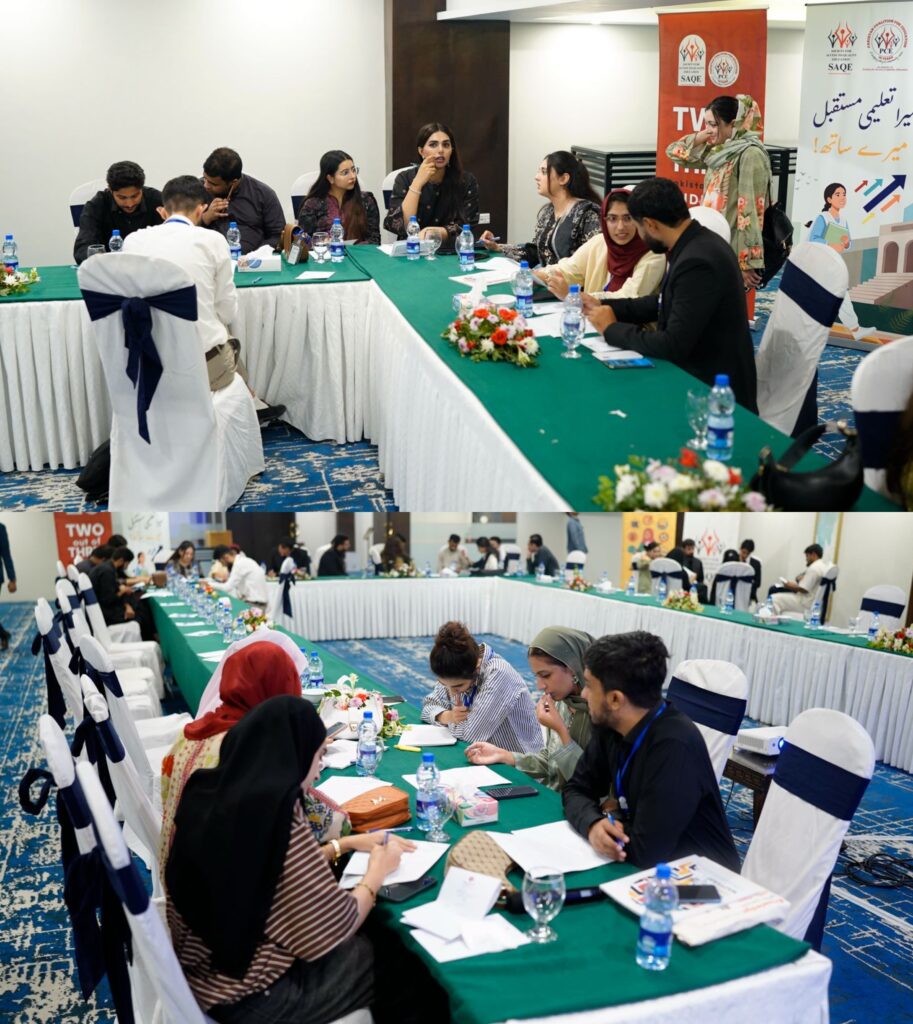
Youth discussions on the research and their experiences in education and building youth agency continued in the Youth Policy Assembly, where the youth participants, under the guidance of assigned youth leaders, built on the research findings and recommendations, and identified five major demands that they then presented during the Convention:
- Make structured consultation with young people a stated requirement of the National Education Policy Development Framework and of every provincial Education Sector Plan, so that no curriculum, skills or sector-plan revision is finalized without documented evidence of youth and student input.
- Establish a formal, democratically elected Student Council in every secondary school, with defined roles, real decision rights over a specified set of matters, and a guaranteed minimum of twenty percent student representation in school decision-making bodies — connected upward to district, provincial, and national youth councils.
- Broaden what the education system recognizes, teaches, and examines as “skills” beyond the narrowly economic, and guarantee youth and students’ genuine, contextualized choice over the subjects and pathways they follow, backed by career guidance and by equitable distribution of the resources.
- Add a small number of youth-informed indicators to the monitoring frameworks the education system already maintains, and make structured civic learning an assessed outcome, with explicit safeguards so that youth and student bodies cannot be captured by political, ethnic or adult agendas.
- Embed one common national minimum standard for youth agency and equity within provincial Education Sector Plans and monitoring systems, pursued through provincially tailored means, supported by district-level education committees that genuinely include marginalized and under-represented young people, and by independent, youth-led monitoring.