ASPBAE in the Global SDG4 HLSC Sherpa Group
Serving for the term 2026-2027, ASPBAE is back in the global SDG4 High Level Steering Committee (HLSC) which is the apex body for global education cooperation and the coordination mechanism for education in the 2030 Sustainable Development Agenda.
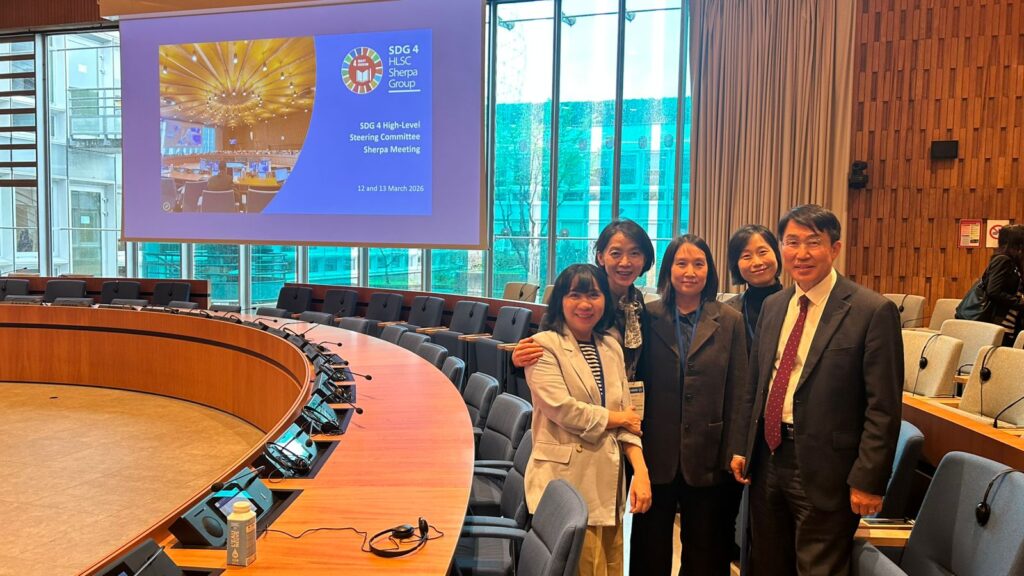
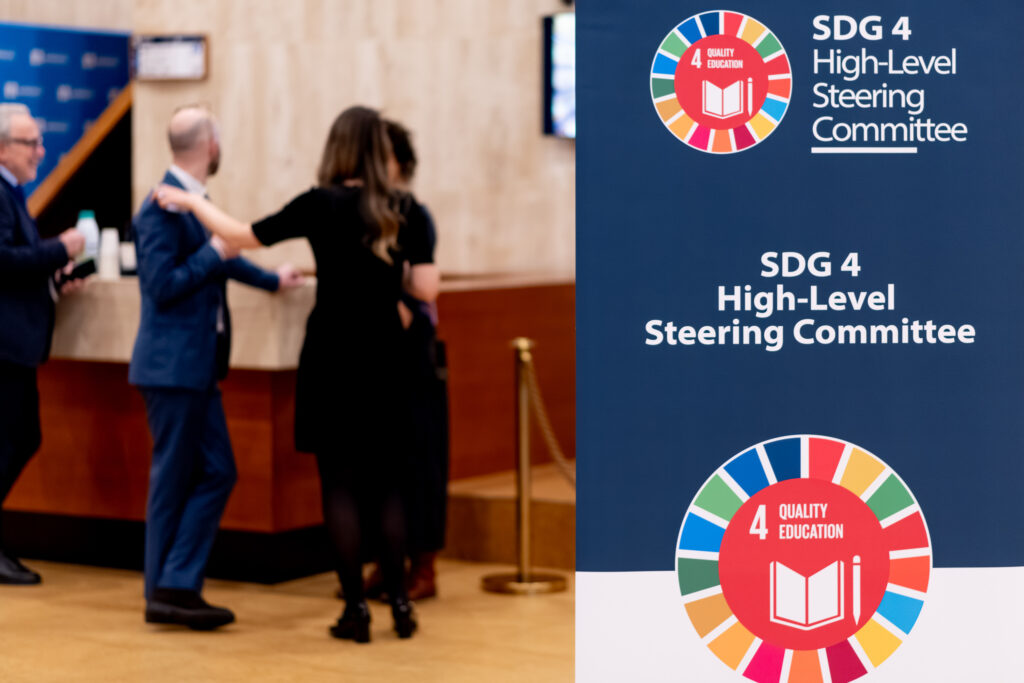
Representing the Collective Consultation of NGOs on Education 2030 (CCNGO Ed2030) in the HLSC Sherpa Group, the ASPBAE Secretary-General, Helen Dabu, attended the in-person Sherpa Meeting on 12-13 March 2026 in the UNESCO Headquarters in Paris, France.
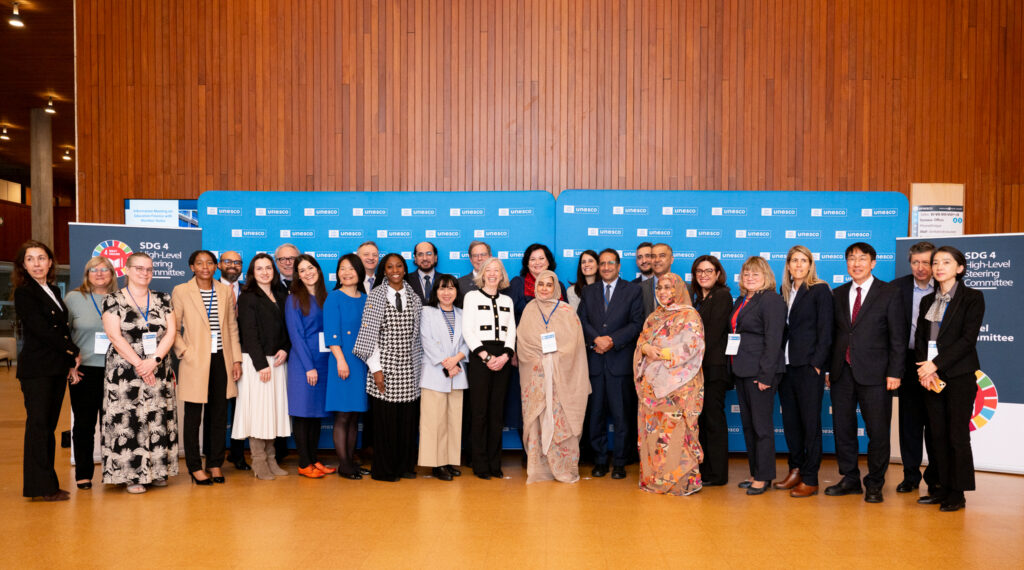
The HLSC Sherpas’ vision for a successful 2026-2027 membership term centred on raising education and its sustainable financing to the top of political agenda through stronger, more unified HLSC advocacy and leadership. They underscored the need to shift from statements to delivery of concrete, high-impact actions with greater efficiency. Sherpas called for stronger global-regional linkages, so that the HLSC’s decisions and actions are relevant to country realities and followed up.
The Sherpa’s group discussion converged around five mutually reinforcing levers for SDG 4 acceleration:
- The teaching profession – as the pivotal lever for system capacity and good quality learning;
- Digital transformation and AI – as enablers of more adaptive, learner-centred and data-informed practices provided they are deployed inclusively, ethically and in support of teaching and learning;
- Skills for life and work – a continuum from strong foundational learning to transferable and lifelong competencies aligned with fast-changing labor markets and societal needs;
- Equity and inclusion – a cross-cutting imperative to shape policy and implementation so no learner is left behind; and
- Sustainable, predictable financing – as an indispensable foundation for stability, predictable and equitable resources are needed to deliver quality education for every learner.
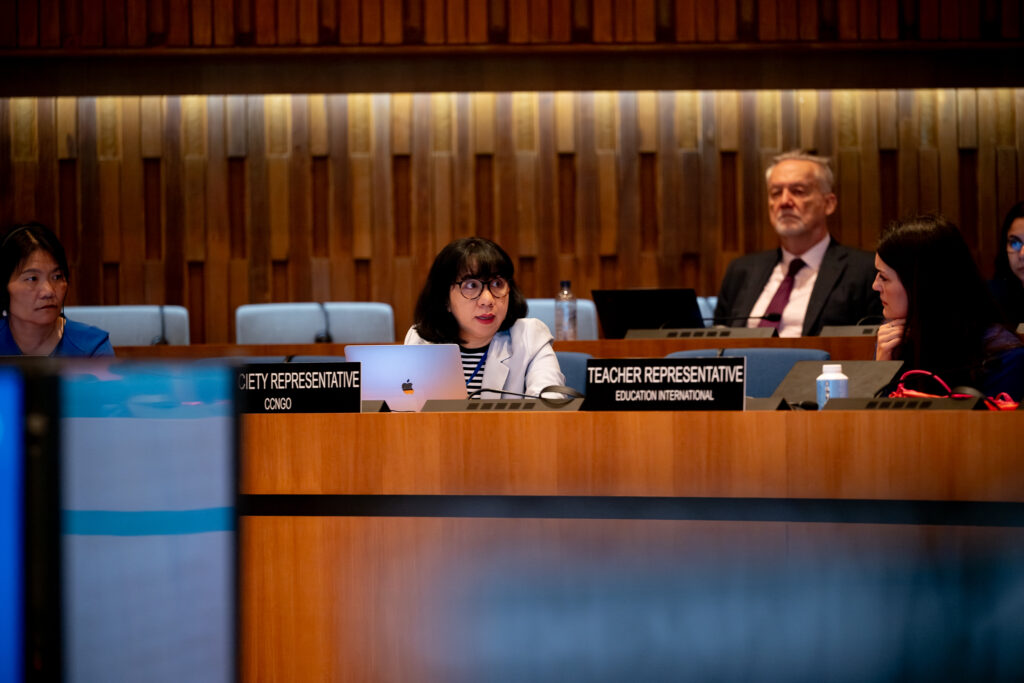
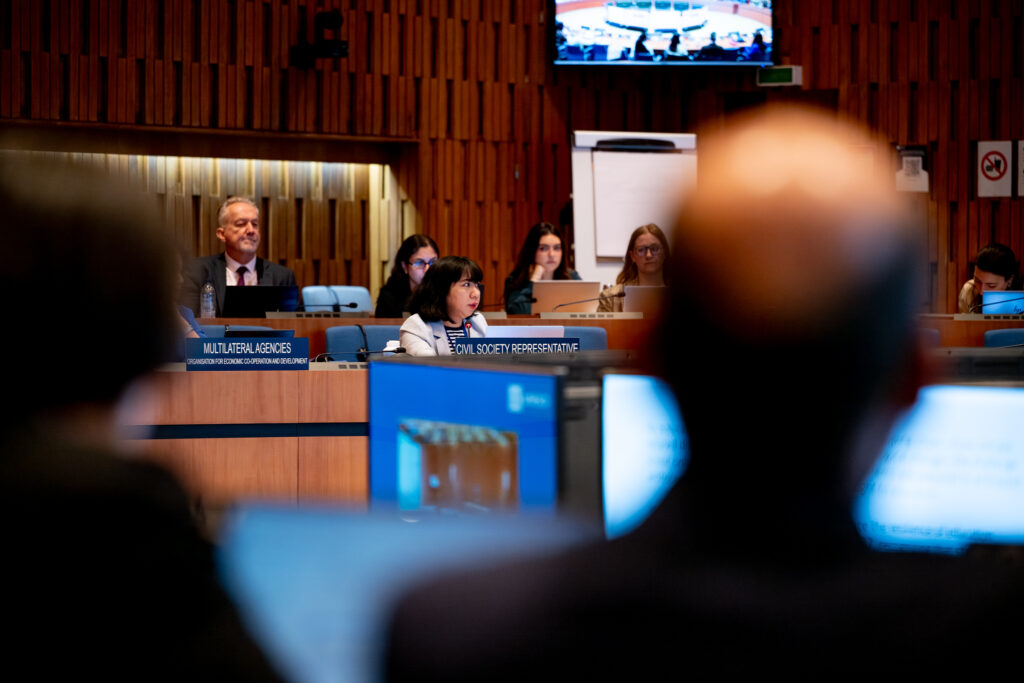
As a CCNGO representative, Helen served as a facilitator and rapporteur for the break-out group discussion and provided a range of plenary interventions throughout the meeting discussions which reflect the CCNGO members’ inputs. These were generated from the open CCNGO constituency-wide consultation initiated by the CCNGO Coordination Group prior to the HLSC meeting.
With regard to the HLSC priorities to accelerate progress, the CCNGO interventions include the following points:
- Leave no one and no target behind in SDG4. In the final five years of SDG4, attention needs to be placed on targets and agenda that have been left behind in earlier efforts especially in delivering gender equality and girls’ education, disability inclusive education, early childhood care and education, technical and vocational education, and relevant skills for youth and adults. All these should be reflected in national development priorities of governments.
- The achievement of SDG4.7 in the current context should be given strong attention. There is a need to promote education for peace, democracy, human rights and global citizenship within inclusive, equitable, resilient and sustainable financed public education systems and strengthened partnerships – this places strong emphasis on SDG 4.7, education in emergencies and other intersectional dimensions of education to respond to a rapidly-changing and vulnerable world.
- The HLSC should be able to account for the implications of the digital transformation as well as technology and AI integration in education, ensuring equitable and inclusive access and curriculum reform, support for teachers and learners at all levels, and address the risks and vulnerabilities posed by technology and AI.
On the sustainable financing agenda, Helen emphasised the points offered by CCNGO members as follows:
- Increasing tax revenues through progressive tax reforms is urgently needed. A key priority must be to increase the tax-to-GDP ratio in lower income countries. The recent Fortaleza Declaration from the Global Education Meeting (GEM) in 2024 suggests 15% is the minimum ratio. Further, the international education community needs to engage in the processes informing the proposed UN Framework Convention on Tax which will profoundly impact the capacity of governments to raise more sustainable tax revenues to invest in education.
- Debt servicing is a massive obstacle to increasing investment in education. A UN framework convention on debt that truly establishes binding principles on responsible borrowing and lending, and develops fairer processes for debt restructuring, could be transformative – unleashing hundreds of billions of dollars for investment in education and other public services.
- There is a need to challenge coercive policies of the International Monetary Fund (IMF) especially on the use of public sector wage bill constraints which ultimately impact teachers.
- Look deeper into systemic barriers in education financing. Some of the major concerns are the leakages and weak accountability mechanisms. Every year, billions of dollars are lost to illicit funding flows, tax evasion and avoidance, massive and unabated corruption, unregulated privatisation, debt payments even for fraudulent loans, unpaid ODA commitments, and losses as a result of climate-induced disasters and weather disturbances. These financial losses are so massive that they drain resources for education and other public services, yet concrete actions are missing or too weak to make a difference.
- The need to deepen and contextualise the challenges and interventions, and adopt stronger positions on pursuing progressive tax reforms, increased long-term public investment in education, equity-driven and gender-responsive financing, and in ensuring transparency, participation and accountability in public finance.
- Clear earmarking for foundational and functional literacy, the out-of-school children and youth (OOSCY), women and girls’ education, disability-inclusive education, distance learning systems and adult learning and education (ALE) must be done with stronger support for fragile, rural, and low-income contexts.
Based on the various Sherpa inputs offered in the meeting, the consensus text framing of the HLSC’s 2026-2027 strategic theme will be as follows:
“Education systems face increasingly complex and overlapping crises—from conflicts, climate-related disasters and pandemic to rapid technological change—at a time when many countries are already far off track in achieving SDG 4. The challenge is not only to recover from disruption, but to ensure systems are prepared to anticipate, withstand and mitigate shocks while protecting the right to education.
In this context, the HLSC Sherpa Group agreed to place the resilience of education systems at the center of the HLSC’s work for 2026–2027, recognizing that stronger, resilient systems are essential to accelerate progress towards SDG 4. This shared focus will prioritize strengthening the teaching profession, advancing foundational and lifelong learning, and promoting inclusive digital transformation—three mutually reinforcing priorities for building more resilient education systems.
The HLSC reaffirmed that sustainable education financing is the foundation of resilient education systems and will continue to mobilize and align global commitment, innovative finance and partnerships to ensure that education systems have predictable and equitable resources needed to deliver quality education for every learner, reducing dependence on external finance.”
With regard to the post-2030 education agenda consultative processes between 2026-2028, the CCNGO inputs provided in the plenary discussion include the following:
- The need to maintain a focused but ambitious scope, centering on unfinished SDG 4 priorities (equity and inclusion, lifelong learning agenda, sustainable financing, and system resilience) while integrating intersectional issues such as climate, digital transformation, and demographic shifts to ensure social, political and economic relevance across regions.
- On the youth consultations in 2026, efforts need to be undertaken to reach the marginalised young people in all their contexts and diversities, recognising that they are not a homogenous group – this includes youth with disabilities, indigenous youth and those in rural areas.
- On the wider global, regional, national and other stakeholder consultations in 2027, there is a need to make sure that thematic policy dialogues or focus groups will be organised. This can include group discussions for out-of-school children and youth, early childhood care and education (ECCE), adult learning and education (ALE), gender transformative education, digital learning and artificial intelligence, and climate change education.
- Dedicated consultations with underrepresented groups—including grassroots women’s organizations, indigenous peoples, youth, people with disabilities, migrants, refugees, and LGBTI+ groups—should create safe spaces for meaningful engagement.
- Cross-sectoral dialogues should be undertaken – from education, finance, planning, labor and others.
- To foster transparency and inclusion in the post-2030 education agenda-setting processes, the HLSC will need to provide structured written input windows with clear guiding questions, and have transparent synthesis reports showing how constituency inputs are reflected — or why they are not, and ensure feedback loops, sharing summaries back with constituency members to validate inputs before finalisation. This approach will strengthen ownership, equity, and genuine representation across regions.
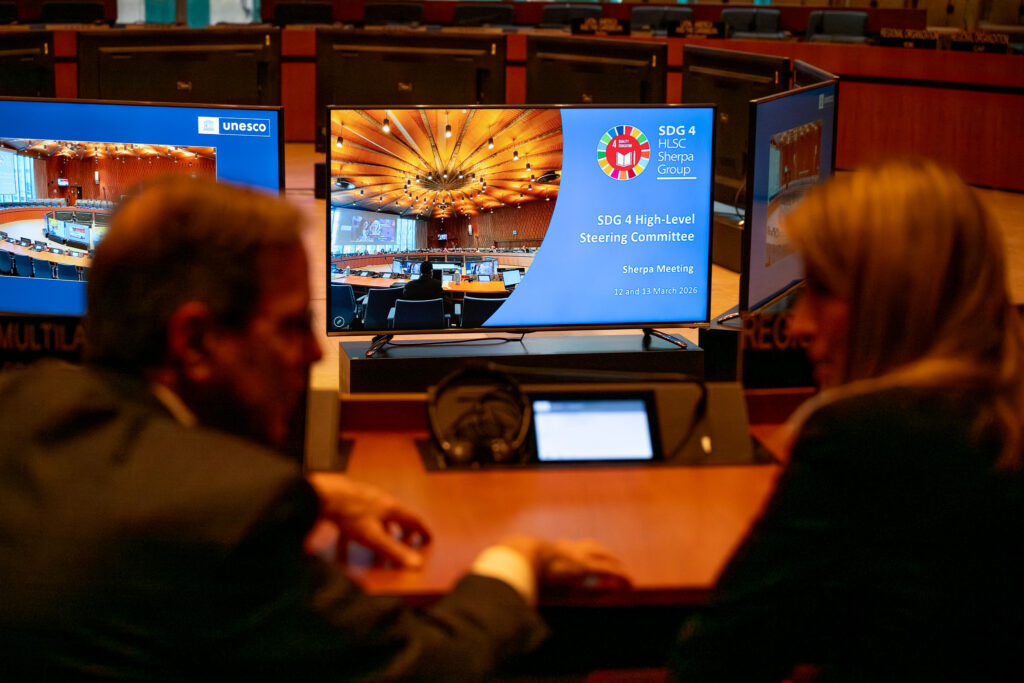
In closing the meeting, the Sherpas reaffirmed HLSC’s value as a unique multilateral and multi-stakeholder platform, stressing the members’ representative engagement across regions and constituencies, better mobilization of members’ expertise and comparative advantages, and broad partnership to underpin both SDG 4 acceleration and the HLSC-led post-2030 education consultation process.
Chaired by a Head of State and Khaled El-Enany, UNESCO’s Director-General, the HLSC aims to speed country-level progress towards SDG 4. Its membership is representative of the global education community, with a ‘Leaders Group’ of 28 Ministers, Heads of Agency, and organizational leaders, and a corresponding ‘Sherpa Group’ of senior technical representatives. The latter provides strategic support to the Leaders Group and leads the technical work on the three HLSC’s Functional Areas, with support of and coordination by with the Inter-Agency Secretariat (IAS). For the 2026-2027 term, the CCNGO Ed2030 civil society constituency is represented in the HLSC Leaders Group by the President of the Global Campaign for Education (GCE), Mr. Refat Sabbah.